How to Choose a Dental SEO Company : 7 Steps That Actually Work

Dental SEO
09 February

Most dentists fail to pick the right SEO agency for their practice. Either they oversimplify it, or lack the knowledge entirely. Hence, they spend over $20k a year, yet the front desk is still dead silent.
Here’s how to not be that dentist.
This isn’t a list of reasons why SEO matters. You already know. This is the exact 7 step process for vetting, comparing, and hiring a dental SEO company that actually drives new patients; not traffic reports.
Step 1: Get Clear on What You Actually Need Before You Call Anyone
Before you talk to a single agency, spend 30 minutes answering these questions for yourself:
- What’s your current state?
- How many new patients per month are you getting from Google right now?
- What’s your goal?
- 10 more new patients per month? 30? Double your implant consultations?
- What services matter most?
- What’s your realistic monthly budget?
Write the answers down. Every agency pitch will sound impressive. But this page keeps you grounded.
Step 2: Shortlist Dental-Only Specialists (Not Generalists)
Dental SEO is its own discipline. Patient search behavior, HIPAA/FTC compliance, and competitive dynamics differ from those in other industries.
Build a shortlist of 4 to 6 agencies that meet all three criteria:
- At least 60% of their client portfolio is dental
- They have case studies with actual practice names (not “Dr. J. in the Midwest”)
- They have been in business for at least 3 years
Where to find them: Google “dental SEO agency” + your country. Check review platforms like Clutch and G2.
You can also ask in the dental practice owner Facebook groups. But treat recommendations as starting points, not decisions.
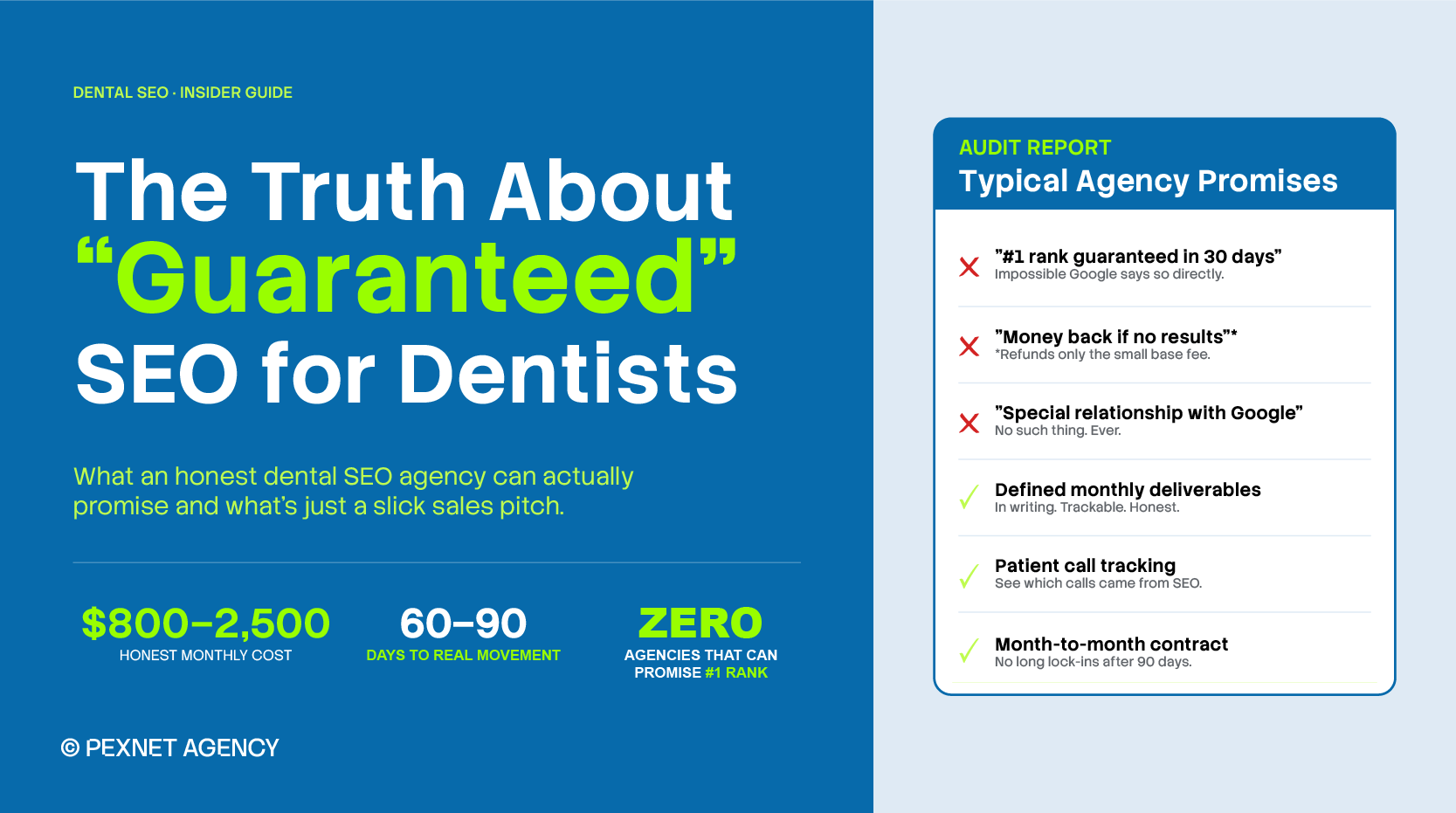
Skip anyone whose homepage screams “#1 guaranteed rankings.” That’s a guarantee no legitimate agency can make.
When comparing agencies, make sure their core offer is built around specialized dental SEO services, not generic local marketing packages.
Step 3: Demand Case Studies Tied to New Patients, Not Traffic
This is where 80% of agencies will eliminate themselves.
Ask every shortlisted agency for three dental case studies showing:
- The practice’s actual name and location
- Where they started (baseline rankings, traffic, new patients)
- What the agency did — in plain English, not jargon
- What changed, including new patient appointments, not just “traffic up 300%.”
- How long did it take
Traffic without patients is vanity. A 400% traffic increase that produced zero new patients means the agency ranked you for the wrong keywords.
Then ask this: “Can I call one of those dentists directly?”
A real agency will set up that call within a few days. A bad one will dodge, delay, or say “they prefer privacy.” If they dodge, scratch them off the list.
A strong dental SEO case study should show what changed in rankings, traffic, and actual patient inquiries.
Step 4: Verify They Handle All Three 2026 Search Channels
In 2026, “dental SEO” isn’t one thing. It’s three channels, and your agency needs all three covered:
| Channel | What It Is | Why It Matters |
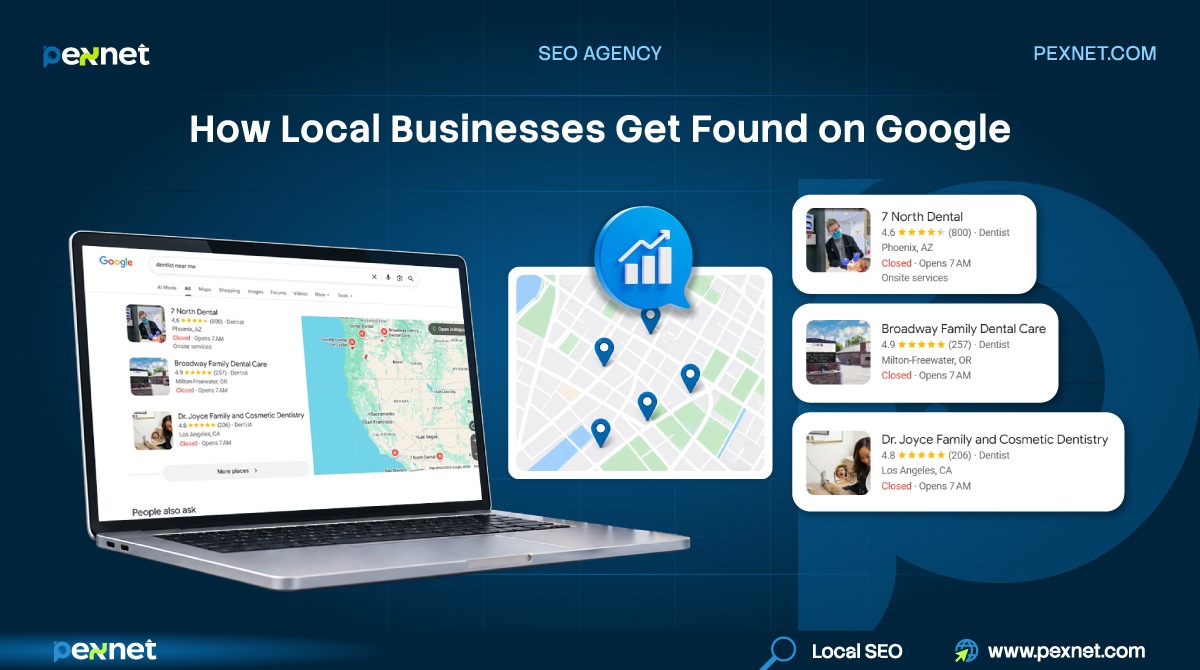
| Local SEO | Google map pack, GBP, reviews, NAP | Captures 70%+ of “dentist near me” clicks |
| Organic SEO | Website rankings on regular Google results | Long-term authority, service page traffic |
| GEO (AI search) | Getting cited by ChatGPT, Perplexity, Google AI Overviews | Over 300M people now ask AI “who’s the best dentist near me” |
Ask them directly: “Walk me through exactly how you’ll get us cited by ChatGPT, Rank in Local Map Pack, and named in Google AI Overviews.”
A good answer mentions: structured schema markup (specifically Dentist, MedicalBusiness, FAQPage, and Person schema for each provider), answer-first content formatting under question-style headings, sameAs links connecting attorney bios to verified external profiles, and monthly AI citation testing.
A bad answer is vague, deflective, or “we’re still exploring that.” If they’re still exploring it, they’re 18 months behind. In that case, don’t pay them to catch up.
If you are new to this, start by understanding what local SEO means for a clinic trying to rank in nearby searches.
Step 5: Interview Them With These 8 Questions
The sales call is your audition for them, not theirs for you. Most dentists let the agency run the call. Don’t. Drive it with these questions:
- “Who on your team will actually be doing the work on my account, and can I meet them before we sign?”
- “What does your first 30 days look like, specifically?”
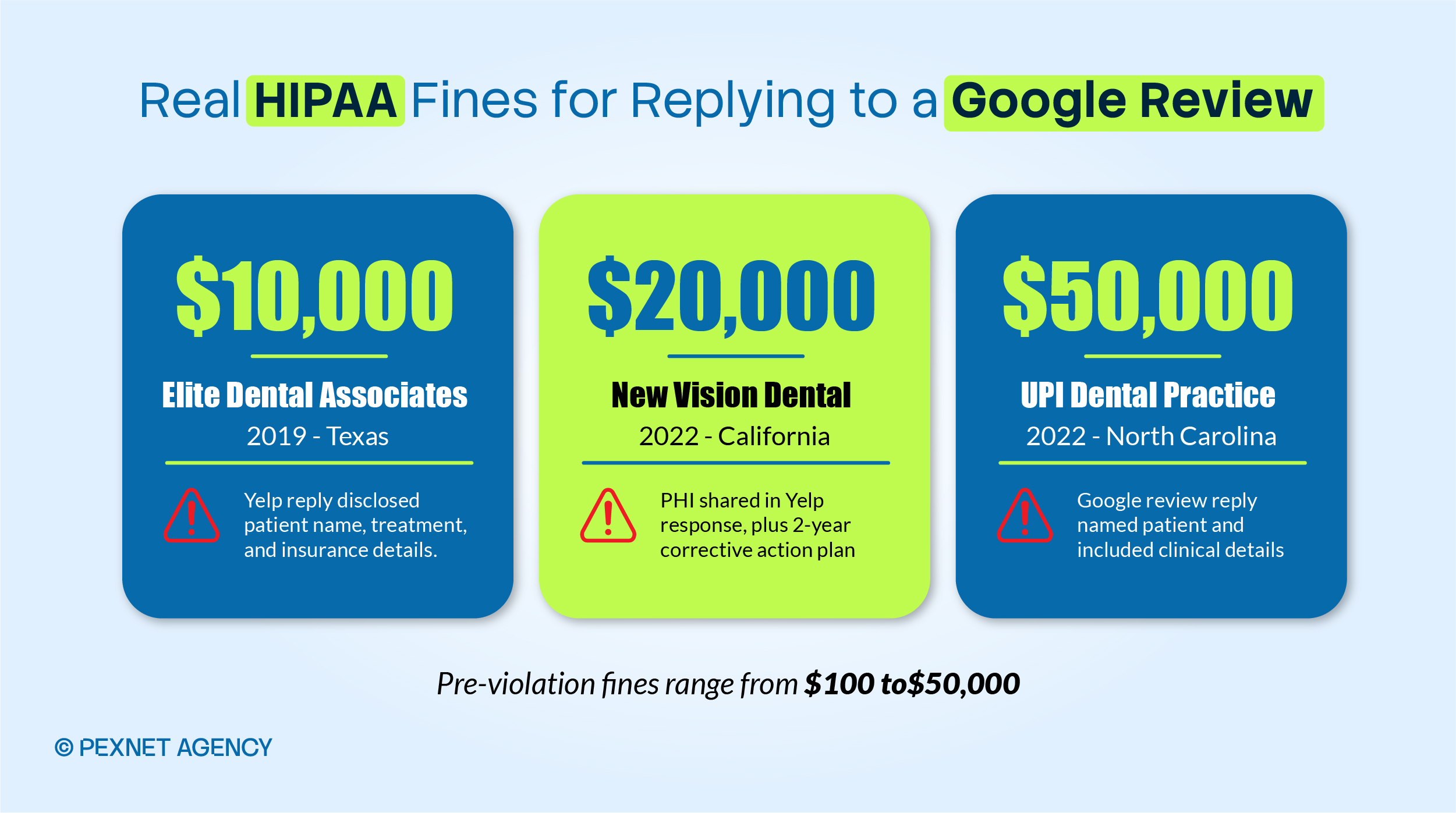
- “How do you stay compliant with FTC advertising rules, my state dental board, and the ADA Code of Ethics?”
- “How do you handle review acquisition without violating FTC guidelines?”
- “If my average new-patient value is $X and your fee is $Y, how many new patients per month do I need to break even, and when do you expect to hit that?”
- “Can you show me a real sample of the monthly report I’d receive?”
- “What’s your contract structure — is there a performance clause or exit option?””What have you failed at, and what did you learn from it?”
That last one is the killer. Honest agencies answer it thoughtfully. Dishonest ones pivot or pretend nothing has ever gone wrong. Nobody has a flawless track record. Anyone claiming they do is lying.
Step 6: Read the Proposal and Contract Like You’d Read an X-Ray
Before you sign anything, the proposal must show:
Specific deliverables. Not “we’ll improve your SEO.” You want lines like: “12 service pages optimized, 4 blog posts published per month, schema markup added to all provider bios, 8 local citations built, reviews responded to within 48 hours.”
Transparent pricing with no hidden fees. Setup fees, content fees, hosting fees, “premium reporting” fees — all of these should be disclosed upfront or not exist. Surprise invoices in month three are an industry classic.
Reasonable contract length. 6 months is fair. 12 is acceptable with a performance clause. 24 months with no exit is a trap. Walk.
Performance expectations in writing. What does “success” look like at month 3? Month 6? Month 12? If the contract is vague about outcomes, the outcome will be vague.
A monthly reporting schedule. You should receive a real report every month — not quarterly, not “when we have updates.” Monthly.
If the proposal is fuzzy on any of these, ask them to rewrite it. Agencies that refuse to put deliverables in writing are telling you who they are.
Step 7: Run the Red Flag Check Before You Sign
Final filter. If you see any of these, do not sign — regardless of how much you like the agency:
- Guarantees of #1 rankings or specific timelines (“ranked #1 in 30 days”). Nobody can guarantee Google’s positions. Anyone who does is either lying or using tactics that will get you penalized.
- Pricing below $750/month for “full” dental SEO. Real work at that price is physically impossible.
- No dental case studies, just “healthcare experience.” Not the same thing.
- No mention of AI search, GEO, or ChatGPT visibility. Disqualifying in 2026.
- Refuses to show a sample monthly report. What are they hiding?
- Suggests buying reviews, using fake testimonials, or “before and after” without patient consent. This violates FTC rules and can result in complaints against your dental license.
- Talks about “keyword density” and “meta keywords.” These haven’t mattered in over a decade. Their knowledge is stuck in 2012.
- The sales call is 90% pitch, 10% questions about your practice. Good agencies ask more than they tell. Bad ones talk over you.
- Before signing a contract, compare the proposed scope with realistic dental SEO cost expectations so you do not overpay for vague deliverables.
If an agency clears all seven steps and triggers zero red flags, you’ve found your partner. Sign the contract, give them a clear 6-month runway, and trust the process.
If they fail any step, keep looking. Another month of searching is cheap. A wrong 12-month contract is not.
The Bottom Line
Choosing a dental SEO company isn’t about who sounds the most confident on the sales call. It’s about who can show you real dental case studies, explain their 2026 process clearly, handle all three search channels (local, organic, AI), put specific deliverables in writing, and report in terms of new patients.
Seven steps. No shortcuts. Every step skipped is a month you’ll pay for later.
The dentist across town who already hired the right agency is showing up in the map pack tonight while you’re reading this. You can be showing up next to them in six months. But only if the agency you pick passes this checklist.

Md Riadul Islam
Carpet Cleaning SEO Specialist
With over 10 years of experience, Riadul is passionate about helping local, independent businesses succeed.
He’s now focused on AI’s impacts on niche websites since aside from Google, people are also using different AI platforms for carpet cleaning services.
He found that while Google cares about content relevance and website authority, AI relies more on trust and credibility to determine recommendations. That’s why he prioritises strengthening trust signals for our clients.
Riadul believes that sustainable growth comes from combining strong branding, deep customer trust, and smart SEO approaches. At Pexnet, he shares the strategies, frameworks, and real-world lessons he has refined over a decade.
Get Quality Leads from Us
PexNet Newsletter - Subscribe for SEO news, trends, updates, & more.
Share this job post


Related Posts

We’re All Ears!
A simple, open conversation can create new doorways to your professional and business success. Don’t hesitate. Take the first step right now.